Trebel is an on-demand music download and discovery platform developed by M&M Media Inc. The company's business model aims to combat digital music piracy by giving users access to on-demand music at no cost while delivering fair compensation to artists and music rights holders. Trebel has a patent that allows it to market itself as the only international music service in which users can legally download music and listen to it offline for free. As of March 2023, Trebel has a catalog of 75 million songs from record labels such as Universal Music Group, Sony Music Entertainment, Warner Music Group and hundreds of independent labels. Trebel is based in Stamford, Connecticut. with additional locations in Mexico City, Jakarta, Bogota, Los Angeles and Miami. The app is available in the Apple App Store, Google Play Store, and Huawei AppGallery. == History == Trebel was founded in 2014 by Gary Mekikian, who was previously the co-founder of answerFriend, Inc., which commercialized web based question-answering technologies and merged with Electric Knowledge, forming InQuira. This company was eventually acquired by Oracle Corporation in 2011. His co-founders at Trebel include Stanford classmates Corey Jones and Luis Soto Durazo, as well as his daughters Grace and Juliette. Mekikian envisioned Trebel as an alternative to music piracy after a high school classmate of his daughters was targeted by cyberattackers while illegally downloading music online. Trebel was initially released in 2015 under the name Project Carmen to students at Ohio State, Santa Monica College, Cal State Fullerton, UCLA and Long Beach State. In its original incarnation, the service planned to target students at 3,000 universities and 30,000 high schools in the United States. A beta version of the app was introduced in 2016 with content from Universal Music Group and Warner Music Group. Trebel launched commercially in the United States and Mexico in 2018. In 2018, Mexican mass-media corporation Televisa also became a minority investor in Trebel. In May 2020, during the early months of the COVID-19 pandemic, Trebel was a digital broadcast partner for Se Agradece, a concert produced in Mexico by Televisa to honor frontline COVID workers that featured artists such as Rosalia, J Balvin, Maluma and Ricky Martin. In June 2021, Trebel reached 3 million monthly active users. In October 2021, Trebel signed a music licensing agreement with Merlin Network, the licensing agency for the independent music sector that controls an estimated 12% of the global digital recorded music market. In January 2022, Trebel announced a strategic alliance with MNC Corporation, an Indonesian media conglomerate, which also became a minority backer of the company. In March 2022, Trebel reported 5.2 million monthly active users as a result of growth in Latin America. In the same month,, Latin music star Maluma became a backer of Trebel and an advisor to Gary Mekikian, helping expand the service throughout Latin America. On April 18, 2022, Trebel launched in Indonesia during the finale of the music competition show X Factor Indonesia. Trebel also signed a deal that month with Soccer Media Solutions, a sports and entertainment marketing agency in Mexico, to sell Trebel’s premium advertising inventory through Soccer Media. In May 2022, Guillermo Ochoa, goalkeeper for the Mexican national soccer team, invested in Trebel and became an ambassador for the company. On October 2, 2022, Trebel collaborated with Musica Studios, one of the largest music companies in Indonesia, on the production of a music festival in Jakarta titled Trebel Music Fest. The event featured performances by top Indonesian music artists such as Noah, Nidji, and d'Masiv. In October 2022, Trebel launched in Colombia. The service reached 1.2 million monthly active users in Colombia six months after launching. In December 2022, Trebel collaborated with KFC in Indonesia on the release of a KFC digital music program using a product called Trebel Max. As part of the program, KFC customers who bought the Crazy Superstar Combo package at KFC received a subscription to Trebel Max for 30 days. Trebel announced the launch of Trebel AI in May 2023. Trebel AI uses ChatGPT-powered technology to generate playlists based on natural language queries from users. In Indonesia, the Trebel AI feature was announced during a broadcast of the show Indonesian Idol XII that took place on May 8, 2023. In July 2023, Trebel reached more than 13 million monthly active users. In November 2023, Trebel became a featured app on the Discord app directory. Discord users that add the Trebel bot to their servers have access to Trebel's on-demand music library and have the exclusive privilege of being DJ's during server sessions with up to 150 concurrent listeners. == Platform == === Features === Trebel has a patent that allows it to market itself as the only international music service in which users can legally download music and listen to it offline for free. As of March 2023, Trebel has a catalog of 75 million songs from record labels such as Universal Music Group, Sony Music Entertainment, Warner Music Group and hundreds of independent labels. Trebel offers unlimited music downloads that are playable in the app by registered users only. Offline listening is free to all users and not blocked by a paywall. Users can search for music based on song, artist, album, browsing friends' recent activity, and through other users' playlists. The app also offers free cloud storage for downloaded songs. Trebel also contains a feature called SongID, which identifies music being played nearby using a short sample, then offers it for download on the service. Podcasts are available for free listening on the service as well. === Business model === Trebel uses a business model that generates revenue from the sale of digital advertising as well as user interactions with branded experiences, and consumption of virtual goods within the app (akin to mobile games). The app also features a brand takeover feature called Trebel Max, which offers unlimited access in exchange for users engaging with experiences offered by specific brands. Trebel’s brand partners include Uber, KFC, Walmart, Coca-Cola, Amazon and P&G. === Content === In September 2022, Trebel secured an exclusive release of the song “Suara Hatiku” by Indonesian actress Amanda Monopo. As of March 2023, Trebel offers 75 million songs through licensing agreements with Universal Music Group, Sony Music Entertainment, Warner Music Group and global indie rights agency Merlin. == Awards == In 2023, Trebel won three Google Play awards including "Best App of 2023", "Best Everyday Essentials" and "Users' Choice".
Glossary of robotics
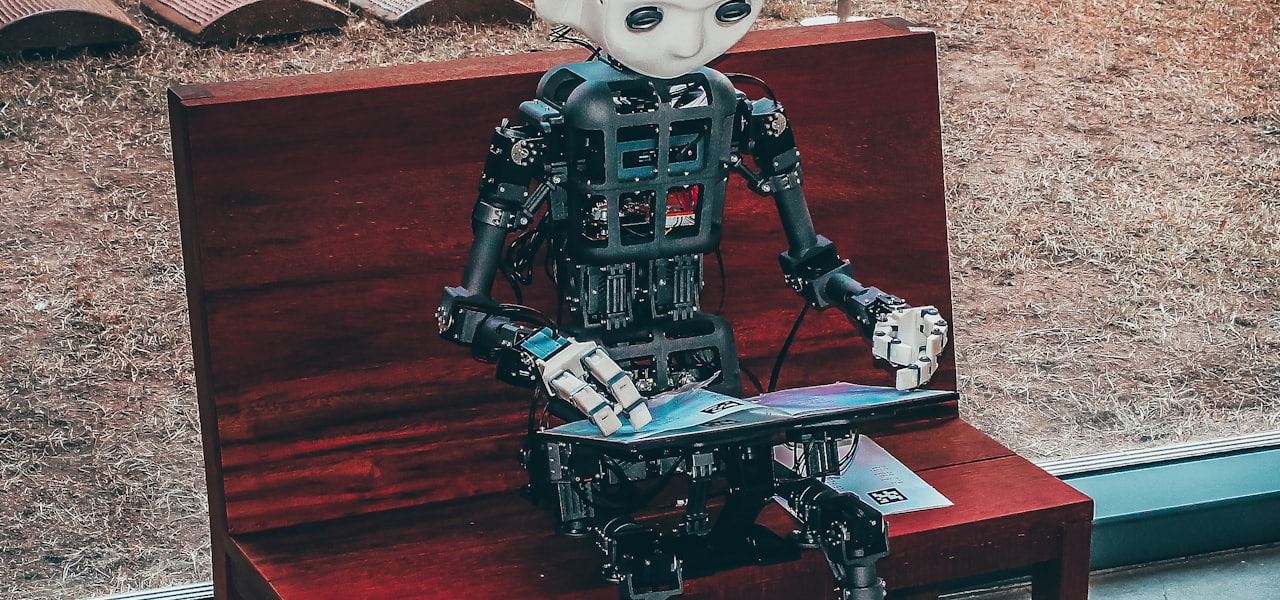
Robotics is the branch of technology that deals with the design, construction, operation, structural disposition, manufacture and application of robots. Robotics is related to the sciences of electronics, engineering, mechanics, and software. The following is a list of common definitions related to the Robotics field. == A == Actuator: a motor that translates control signals into mechanical movement. The control signals are usually electrical but may, more rarely, be pneumatic or hydraulic. The power supply may likewise be any of these. It is common for electrical control to be used to modulate a high-power pneumatic or hydraulic motor. Aerobot: a robot capable of independent flight on other planets. A type of aerial robot. Arduino: The current platform of choice for small-scale robotic experimentation and physical computing. Artificial intelligence: is the intelligence of machines and the branch of computer science that aims to create it. Aura (satellite): a robotic spacecraft launched by NASA in 2004 which collects atmospheric data from Earth. Automaton: an early self-operating robot, performing exactly the same actions, over and over. Autonomous vehicle: a vehicle equipped with an autopilot system, which is capable of driving from one point to another without input from a human operator. == B == Biomimetic: See Bionics. Bionics: also known as biomimetics, biognosis, biomimicry, or bionical creativity engineering is the application of biological methods and systems found in nature to the study and design of engineering systems and modern technology. == C == CAD/CAM (computer-aided design and computer-aided manufacturing): These systems and their data may be integrated into robotic operations. Čapek, Karel: Czech author who coined the term 'robot' in his 1921 play, Rossum's Universal Robots. Chandra X-ray Observatory: a robotic spacecraft launched by NASA in 1999 to collect astronomical data. Cloud robotics: robots empowered with more capacity and intelligence from cloud. Combat, robot: a hobby or sport event where two or more robots fight in an arena to disable each other. This has developed from a hobby in the 1990s to several TV series worldwide. Cruise missile: a robot-controlled guided missile that carries an explosive payload. Cyborg: also known as a cybernetic organism, a being with both biological and artificial (e.g. electronic, mechanical or robotic) parts. == D == Degrees of freedom: the extent to which a robot can move itself; expressed in terms of Cartesian coordinates (x, y, and z) and angular movements (yaw, pitch, and roll). Delta robot: a tripod linkage, used to construct fast-acting manipulators with a wide range of movement. Drive Power: The energy source or sources for the robot actuators. == E == Emergent behaviour, a complicated resultant behaviour that emerges from the repeated operation of simple underlying behaviours. Envelope (Space), Maximum The volume of space encompassing the maximum designed movements of all robot parts including the end-effector, workpiece, and attachments. Explosive ordnance disposal robot A mobile robot designed to assess whether an object contains explosives; some carry detonators that can be deposited at the object and activated after the robot withdraws. == F == FIRST(For Inspiration and Recognition of Science and Technology): an organization founded by inventor Dean Kamen in 1989 in order to develop ways to inspire students in engineering and technology fields. Forward chaining: a process in which events or received data are considered by an entity to intelligently adapt its behavior. == G == Gynoid: A humanoid robot designed to look like a human female. == H == Haptic: tactile feedback technology using the operator's sense of touch. Also sometimes applied to robot manipulators with their own touch sensitivity. Hexapod (platform): A movable platform using six linear actuators. Often used in flight simulators and fairground rides, they also have applications as a robotic manipulator. Hexapod (walker): A six-legged walking robot, using a simple insect-like locomotion. Human–computer interaction. Humanoid: A robotic entity designed to resemble a human being in form, function, or both. Hydraulics: the control of mechanical force and movement, generated by the application of liquid under pressure. cf. pneumatics. == I == Industrial robot: A reprogrammable, multifunctional manipulator designed to move material, parts, tools, or specialized devices through variable programmed motions for the performance of a variety of tasks. Insect robot: A small robot designed to imitate insect behaviors rather than complex human behaviors. == K == Kalman filter: a mathematical technique to estimate the value of a sensor measurement, from a series of intermittent and noisy values. Kinematics: the study of motion, as applied to robots. This includes both the design of linkages to perform motion, their power, control and stability; also their planning, such as choosing a sequence of movements to achieve a broader task. Inverse Kinematics: the process of determining joint angles required for a robot's end-effector to reach a desired position and orientation in space. Used in motion planning to calculate motor commands from target positions. == L == Linear actuator A form of motor that generates a linear movement directly. == M == Manipulator or gripper: A robotic 'hand'. Mobile robot: A self-propelled and self-contained robot that is capable of moving over a mechanically unconstrained course. Muting: The deactivation of a presence-sensing safeguarding device during a portion of the robot cycle. Mecanum wheel: A wheel fitted with angled rollers that enables a robot vehicle to move in multiple directions, including sideways. == O == Ornithopter – An aerial robot or drone that achieves flight through a flapping-wing mechanism rather than rotating blades or fixed wings, often utilized for highly maneuverable flight. == P == Parallel manipulator: an articulated robot or manipulator based on a number of kinematic chains, actuators and joints, in parallel. cf. serial manipulator. Pendant: Any portable control device that permits an operator to control the robot from within the restricted envelope (space) of the robot. Pneumatics: the control of mechanical force and movement, generated by the application of compressed gas. cf. hydraulics. Powered exoskeleton: is a wearable mobile machine that allow for limb movement with increased strength and endurance. Prosthetic robots: programmable manipulators or devices for missing human limbs. == R == Remote manipulator: A manipulator under direct human control, often used for work with hazardous materials. Robonaut: a development project conducted by NASA to create humanoid robots capable of using space tools and working in similar environments to suited astronauts. == S == Sensor fusion:The process of combining data from multiple sensors, such as LiDAR, cameras, global positioning systems (GPS), and inertial measurement units (IMUs), to produce a more accurate and reliable understanding of an environment than using a single sensor alone. It is widely used in robotics and autonomous systems to improve perception, localization, and decision-making. Serial manipulator: an articulated robot or manipulator with a single series kinematic chain of actuators. cf. parallel manipulator. Service robots are machines that extend human capabilities. Servo, a motor that moves to and maintains a set position under command, rather than continuously moving. Servomechanism An automatic device that uses error-sensing negative feedback to correct the performance of a mechanism. Single Point of Control The ability to operate the robot such that initiation or robot motion from one source of control is possible only from that source and cannot be overridden from another source. Slow Speed Control A mode of robot motion control where the velocity of the robot is limited to allow persons sufficient time either to withdraw the hazardous motion or stop the robot. Snake robot A robot component resembling a tentacle or elephant's trunk, where many small actuators are used to allow continuous curved motion of a robot component, with many degrees of freedom. This is usually applied to snake-arm robots, which use this as a flexible manipulator. A rarer application is the snakebot, where the entire robot is mobile and snake-like, so as to gain access through narrow spaces. Stepper motor Stewart platform A movable platform using six linear actuators, hence also known as a Hexapod. Subsumption architecture A robot architecture that uses a modular, bottom-up design beginning with the least complex behavioral tasks. Surgical robot, a remote manipulator used for keyhole surgery Swarm robotics involve large numbers of mostly simple physical robots. Their actions may seek to incorporate emergent behavior observed in social insects (swarm intelligence). Synchro == T == Teach Mode: The control state that al
Glushkov's construction algorithm
In computer science theory – particularly formal language theory – Glushkov's construction algorithm, invented by Victor Mikhailovich Glushkov, transforms a given regular expression into an equivalent nondeterministic finite automaton (NFA). Thus, it forms a bridge between regular expressions and nondeterministic finite automata: two abstract representations of the same class of formal languages. A regular expression may be used to conveniently describe an advanced search pattern in a "find and replace"–like operation of a text processing utility. Glushkov's algorithm can be used to transform it into an NFA, which furthermore is small by nature, as the number of its states equals the number of symbols of the regular expression, plus one. Subsequently, the NFA can be made deterministic by the powerset construction and then be minimized to get an optimal automaton corresponding to the given regular expression. The latter format is best suited for execution on a computer. From another, more theoretical point of view, Glushkov's algorithm is a part of the proof that NFA and regular expressions both accept exactly the same languages; that is, the regular languages. The converse of Glushkov's algorithm is Kleene's algorithm, which transforms a finite automaton into a regular expression. The automaton obtained by Glushkov's construction is the same as the one obtained by Thompson's construction algorithm, once its ε-transitions are removed. Glushkov's construction algorithm is also called The algorithm of Berry-Sethi, named after Gérard Berry and Ravi Sethi who worked on this construction. == Construction == Given a regular expression e, the Glushkov Construction Algorithm creates a non-deterministic automaton that accepts the language L ( e ) {\displaystyle L(e)} accepted by e. The construction uses four steps: === Step 1 === Linearisation of the expression. Each letter of the alphabet appearing in the expression e is renamed, so that each letter occurs at most once in the new expression e ′ {\displaystyle e'} . Glushkov's construction essentially relies on the fact that e ′ {\displaystyle e'} represents a local language L ( e ′ ) {\displaystyle L(e')} . Let A be the old alphabet and let B be the new one. === Step 2a === Computation of the sets P ( e ′ ) {\displaystyle P(e')} , D ( e ′ ) {\displaystyle D(e')} , and F ( e ′ ) {\displaystyle F(e')} . The first, P ( e ′ ) {\displaystyle P(e')} , is the set of letters which occurs as first letter of a word of L ( e ′ ) {\displaystyle L(e')} . The second, D ( e ′ ) {\displaystyle D(e')} , is the set of letters that can end a word of L ( e ′ ) {\displaystyle L(e')} . The last one, F ( e ′ ) {\displaystyle F(e')} , is the set of letter pairs that can occur in words of L ( e ′ ) {\displaystyle L(e')} , i.e. it is the set of factors of length two of the words of L ( e ′ ) {\displaystyle L(e')} . Those sets are mathematically defined by P ( e ′ ) = { x ∈ B ∣ x B ∗ ∩ L ( e ′ ) ≠ ∅ } {\displaystyle P(e')=\{x\in B\mid xB^{}\cap L(e')\neq \emptyset \}} , D ( e ′ ) = { y ∈ B ∣ B ∗ y ∩ L ( e ′ ) ≠ ∅ } {\displaystyle D(e')=\{y\in B\mid B^{}y\cap L(e')\neq \emptyset \}} , F ( e ′ ) = { u ∈ B 2 ∣ B ∗ u B ∗ ∩ L ( e ′ ) ≠ ∅ } {\displaystyle F(e')=\{u\in B^{2}\mid B^{}uB^{}\cap L(e')\neq \emptyset \}} . They are computed by induction over the structure of the expression, as explained below. === Step 2b === Computation of the set Λ ( e ′ ) {\displaystyle \Lambda (e')} which contains the empty word ε {\displaystyle \varepsilon } if this word belongs to L ( e ′ ) {\displaystyle L(e')} , and is the empty set otherwise. Formally, this is Λ ( e ′ ) = { ε } ∩ L ( e ′ ) {\displaystyle \Lambda (e')=\{\varepsilon \}\cap L(e')} . === Step 3 === Computation of automaton recognizing the local language, as defined by P ( e ′ ) {\displaystyle P(e')} , D ( e ′ ) {\displaystyle D(e')} , F ( e ′ ) {\displaystyle F(e')} , and Λ ( e ′ ) {\displaystyle \Lambda (e')} . By definition, the local language defined by the sets P, D, and F is the set of words which begin with a letter of P, end by a letter of D, and whose factors of length 2 belong to F, optionally also including the empty word; that is, it is the language: L ′ = ( P B ∗ ∩ B ∗ D ) ∖ B ∗ ( B 2 ∖ F ) B ∗ ∪ Λ ( e ′ ) {\displaystyle L'=(PB^{}\cap B^{}D)\setminus B^{}(B^{2}\setminus F)B^{}\cup \Lambda (e')} . Strictly speaking, it is the computation of the automaton for the local language denoted by this linearised expression that is Glushkov's construction. === Step 4 === Remove the linearisation, replacing each indexed letter B by the original letter of A. == Example == Consider the regular expression e = ( a ( a b ) ∗ ) ∗ + ( b a ) ∗ {\displaystyle e=(a(ab)^{})^{}+(ba)^{}} . == Computation of the set of letters == The computation of the sets P, D, F, and Λ is done inductively over the regular expression e ′ {\displaystyle e'} . One must give the values for ∅, ε (the symbols for the empty language and the singleton language containing the empty word), the letters, and the results of the operations + , ⋅ , ∗ {\displaystyle +,\cdot ,^{}} . The most costly operations are the cartesian products of sets for the computation of F. == Properties == The obtained automaton is non-deterministic, and it has as many states as the number of letters of the regular expression, plus one. It has been proven that every Thompson's automaton can be transformed into Glushkov's automaton via a ε-transitions elimination method. == Applications and deterministic expressions == The computation of the automaton by the expression occurs often; it has been systematically used in search functions, in particular by the Unix grep command. Similarly, XML's specification also uses such constructions; for more efficiency, regular expressions of a certain kind, called deterministic expressions, have been studied.
Dan Roth
Dan Roth (Hebrew: דן רוט) is the Eduardo D. Glandt Distinguished Professor of Computer and Information Science at the University of Pennsylvania and the Chief AI Scientist at Oracle. Until June 2024 Roth was a VP and distinguished scientist at AWS AI. In his role at AWS, Roth led over the last three years the scientific effort behind the first-generation Generative AI products from AWS, including Titan Models, Amazon Q efforts, and Bedrock, from inception until they became generally available. Roth got his B.A. summa cum laude in mathematics from the Technion, Israel, and his Ph.D. in computer science from Harvard University in 1995. He taught at the University of Illinois at Urbana-Champaign from 1998 to 2017 before moving to the University of Pennsylvania. == Professional career == Roth is a Fellow of the American Association for the Advancement of Science (AAAS), the Association for Computing Machinery (ACM), the Association for the Advancement of Artificial Intelligence (AAAI), and the Association of Computational Linguistics (ACL). Roth’s research focuses on the computational foundations of intelligent behavior. He develops theories and systems pertaining to intelligent behavior using a unified methodology, at the heart of which is the idea that learning has a central role in intelligence. His work centers around the study of machine learning and inference methods to facilitate natural language understanding. In doing that he has pursued several interrelated lines of work that span multiple aspects of this problem - from fundamental questions in learning and inference and how they interact, to the study of a range of natural language processing (NLP) problems and developing advanced machine learning based tools for natural language applications. Roth has made seminal contribution to the fusion of Learning and Reasoning, Machine Learning with weak, incidental supervision, and to machine learning and inference approaches to natural language understanding. He has written the first paper on zero-shot learning in natural language processing, a 2008 paper by Chang, Ratinov, Roth, and Srikumar that was published at AAAI’08, but the name given to the learning paradigm there was dataless classification. Roth has worked on probabilistic reasoning (including its complexity and probabilistic lifted inference ), Constrained Conditional Models (ILP formulations of NLP problems) and constraints-driven learning, part-based (constellation) methods in object recognition, response based Learning, He has developed NLP and Information extraction tools that are being used broadly by researchers and commercially, including NER, coreference resolution, wikification, SRL, and ESL text correction. Roth is a co-founder of NexLP, Inc., a startup that applies natural language processing and machine learning in the legal and compliance domains. In 2020, NexLP was acquired by Reveal, Inc., an e-discovery software company. He is currently on the scientific advisory board of the Allen Institute for AI.
The Best Free AI Copywriting Tool for Beginners
Curious about the best AI copywriting tool? An AI copywriting tool is software that uses machine learning to help you get more done — it combines speed, accuracy, and an interface that just works. Hands-on testing shows real-world results vary, so a short free trial is the smartest way to decide. Whether you are a beginner or a pro, the right AI copywriting tool slots into your workflow and pays for itself fast. This guide breaks down the top picks, their pros and cons, and who each one is best for.
Meta-learning (computer science)
Meta-learning is a subfield of machine learning where automatic learning algorithms are applied to metadata about machine learning experiments. As of 2017, the term had not found a standard interpretation, however the main goal is to use such metadata to understand how automatic learning can become flexible in solving learning problems, hence to improve the performance of existing learning algorithms or to learn (induce) the learning algorithm itself, hence the alternative term learning to learn. Flexibility is important because each learning algorithm is based on a set of assumptions about the data, its inductive bias. This means that it will only learn well if the bias matches the learning problem. A learning algorithm may perform very well in one domain, but not on the next. This poses strong restrictions on the use of machine learning or data mining techniques, since the relationship between the learning problem (often some kind of database) and the effectiveness of different learning algorithms is not yet understood. By using different kinds of metadata, like properties of the learning problem, algorithm properties (like performance measures), or patterns previously derived from the data, it is possible to learn, select, alter or combine different learning algorithms to effectively solve a given learning problem. Critiques of meta-learning approaches bear a strong resemblance to the critique of metaheuristic, a possibly related problem. A good analogy to meta-learning, and the inspiration for Jürgen Schmidhuber's early work (1987) and Yoshua Bengio et al.'s work (1991), considers that genetic evolution learns the learning procedure encoded in genes and executed in each individual's brain. In an open-ended hierarchical meta-learning system using genetic programming, better evolutionary methods can be learned by meta evolution, which itself can be improved by meta meta evolution, etc. == Definition == A proposed definition for a meta-learning system combines three requirements: The system must include a learning subsystem. Experience is gained by exploiting meta knowledge extracted in a previous learning episode on a single dataset, or from different domains. Learning bias must be chosen dynamically. Bias refers to the assumptions that influence the choice of explanatory hypotheses and not the notion of bias represented in the bias-variance dilemma. Meta-learning is concerned with two aspects of learning bias. Declarative bias specifies the representation of the space of hypotheses, and affects the size of the search space (e.g., represent hypotheses using linear functions only). Procedural bias imposes constraints on the ordering of the inductive hypotheses (e.g., preferring smaller hypotheses). == Common approaches == There are three common approaches: using (cyclic) networks with external or internal memory (model-based) learning effective distance metrics (metrics-based) explicitly optimizing model parameters for fast learning (optimization-based). === Model-Based === Model-based meta-learning models updates its parameters rapidly with a few training steps, which can be achieved by its internal architecture or controlled by another meta-learner model. ==== Memory-Augmented Neural Networks ==== A Memory-Augmented Neural Network, or MANN for short, is claimed to be able to encode new information quickly and thus to adapt to new tasks after only a few examples. ==== Meta Networks ==== Meta Networks (MetaNet) learns a meta-level knowledge across tasks and shifts its inductive biases via fast parameterization for rapid generalization. === Metric-Based === The core idea in metric-based meta-learning is similar to nearest neighbors algorithms, which weight is generated by a kernel function. It aims to learn a metric or distance function over objects. The notion of a good metric is problem-dependent. It should represent the relationship between inputs in the task space and facilitate problem solving. ==== Convolutional Siamese Neural Network ==== Siamese neural network is composed of two twin networks whose output is jointly trained. There is a function above to learn the relationship between input data sample pairs. The two networks are the same, sharing the same weight and network parameters. ==== Matching Networks ==== Matching Networks learn a network that maps a small labelled support set and an unlabelled example to its label, obviating the need for fine-tuning to adapt to new class types. ==== Relation Network ==== The Relation Network (RN), is trained end-to-end from scratch. During meta-learning, it learns to learn a deep distance metric to compare a small number of images within episodes, each of which is designed to simulate the few-shot setting. ==== Prototypical Networks ==== Prototypical Networks learn a metric space in which classification can be performed by computing distances to prototype representations of each class. Compared to recent approaches for few-shot learning, they reflect a simpler inductive bias that is beneficial in this limited-data regime, and achieve satisfied results. === Optimization-Based === What optimization-based meta-learning algorithms intend for is to adjust the optimization algorithm so that the model can be good at learning with a few examples. ==== LSTM Meta-Learner ==== LSTM-based meta-learner is to learn the exact optimization algorithm used to train another learner neural network classifier in the few-shot regime. The parametrization allows it to learn appropriate parameter updates specifically for the scenario where a set amount of updates will be made, while also learning a general initialization of the learner (classifier) network that allows for quick convergence of training. ==== Temporal Discreteness ==== Model-Agnostic Meta-Learning (MAML) is a fairly general optimization algorithm, compatible with any model that learns through gradient descent. ==== Reptile ==== Reptile is a remarkably simple meta-learning optimization algorithm, given that both of its components rely on meta-optimization through gradient descent and both are model-agnostic. == Examples == Some approaches which have been viewed as instances of meta-learning: Recurrent neural networks (RNNs) are universal computers. In 1993, Jürgen Schmidhuber showed how "self-referential" RNNs can in principle learn by backpropagation to run their own weight change algorithm, which may be quite different from backpropagation. In 2001, Sepp Hochreiter & A.S. Younger & P.R. Conwell built a successful supervised meta-learner based on Long short-term memory RNNs. It learned through backpropagation a learning algorithm for quadratic functions that is much faster than backpropagation. Researchers at Deepmind (Marcin Andrychowicz et al.) extended this approach to optimization in 2017. In the 1990s, Meta Reinforcement Learning or Meta RL was achieved in Schmidhuber's research group through self-modifying policies written in a universal programming language that contains special instructions for changing the policy itself. There is a single lifelong trial. The goal of the RL agent is to maximize reward. It learns to accelerate reward intake by continually improving its own learning algorithm which is part of the "self-referential" policy. An extreme type of Meta Reinforcement Learning is embodied by the Gödel machine, a theoretical construct which can inspect and modify any part of its own software which also contains a general theorem prover. It can achieve recursive self-improvement in a provably optimal way. Model-Agnostic Meta-Learning (MAML) was introduced in 2017 by Chelsea Finn et al. Given a sequence of tasks, the parameters of a given model are trained such that few iterations of gradient descent with few training data from a new task will lead to good generalization performance on that task. MAML "trains the model to be easy to fine-tune." MAML was successfully applied to few-shot image classification benchmarks and to policy-gradient-based reinforcement learning. Variational Bayes-Adaptive Deep RL (VariBAD) was introduced in 2019. While MAML is optimization-based, VariBAD is a model-based method for meta reinforcement learning, and leverages a variational autoencoder to capture the task information in an internal memory, thus conditioning its decision making on the task. When addressing a set of tasks, most meta learning approaches optimize the average score across all tasks. Hence, certain tasks may be sacrificed in favor of the average score, which is often unacceptable in real-world applications. By contrast, Robust Meta Reinforcement Learning (RoML) focuses on improving low-score tasks, increasing robustness to the selection of task. RoML works as a meta-algorithm, as it can be applied on top of other meta learning algorithms (such as MAML and VariBAD) to increase their robustness. It is applicable to both supervised meta learning and meta reinforcement learning. Discovering meta-knowledge works by inducing knowledge
Magnetic ink character recognition
Magnetic ink character recognition code, known in short as MICR code, is a character recognition technology used mainly by the banking industry to streamline the processing and clearance of cheques and other documents. MICR encoding, called the MICR line, is at the bottom of cheques and other vouchers and typically includes the document-type indicator, bank code, bank account number, cheque number, cheque amount (usually added after a cheque is presented for payment), and a control indicator. The format for the bank code and bank account number is country-specific. The technology allows MICR readers to scan and read the information directly into a data-collection device. Unlike barcode and similar technologies, MICR characters can be read easily by humans. MICR encoded documents can be processed much faster and more accurately than conventional OCR encoded documents. == Pre-Unicode standard representation == The ISO standard ISO 2033:1983, and the corresponding Japanese Industrial Standard JIS X 9010:1984 (originally JIS C 6229–1984), define character encodings for OCR-A, OCR-B and E-13B. == International spread == There are two major MICR fonts in use: E-13B and CMC-7. There is no particular international agreement on which countries use which font. In practice, this does not create particular problems as cheques and other vouchers do not usually flow out of a particular jurisdiction. The E-13B font has been adopted as an international standard in ISO 1004-1:2013, and is the standard in Australia, Canada, the United Kingdom, the United States, as well as Central America and much of Asia, besides other countries. The CMC-7 font has been adopted as an international standard in ISO 1004-2:2013, and is widely used in Europe, including France and Italy, Mexico, and South America, including Argentina, Brazil, Chile, besides other countries. Israel is the only country that can use both fonts simultaneously, though the practice makes the system significantly less efficient. This situation is the product of the Israelis adopting CMC-7, while the Palestinians opted for E-13B. == Fonts == === E-13B === E-13B is a 14-character set, comprising the 10 decimal digits, and the following symbols: ⑆ (transit: used to delimit a bank code); ⑈ (on-us: used to delimit a customer account number); ⑇ (amount: used to delimit a transaction amount); ⑉ (dash: used to delimit parts of numbers—e.g., routing numbers or account numbers). In the check printing and banking industries the E-13B MICR line is also commonly referred to as the TOAD line. This reference comes from the 4 characters: Transit, On-us, Amount, and Dash. Compared to CMC-7, some pairs of E-13B characters (notably 2 and 5) can produce relatively similar results when magnetically scanned; however, as a fallback if magnetic reading fails, E-13B also performs well under optical character recognition. The E-13B repertoire can be represented in Unicode (see below). The official Unicode names contain misnomers. For example, the ⑈ on-us symbol is official titled "OCR Dash". Prior to Unicode, it could be encoded according to ISO 2033:1983, which encodes digits in their usual ASCII locations, transit as 0x3A, on-us as 0x3C, amount as 0x3B, and dash as 0x3D. For EBCDIC, IBM code page 1001 encodes digits in their usual EBCDIC locations, transit as 0xDB, on-us as 0xEB, amount as 0xCB, and dash as 0xFB. IBM code page 1032 extends code page 1001 by adding alternative encodings for transit at 0x5C, 0x7A and 0xC1, on-us at 0x4C, 0x61 and 0xC3, amount at 0x5B, 0x5E and 0xC2 and dash at 0x60, 0x7E and 0xC4, in addition to a zero-width space at 0x5A. These alternative representations were added for interoperability with Siemens and Océ printers. === CMC-7 === CMC-7 includes 10 numeric digits, 26 capital letters, and 5 control characters: S I (internal), S II (terminator), S III (amount), S IV (an unused character), and S V (routing). CMC-7 has a barcode format, with every character having two distinct large gaps in different places, as well as distinct patterns in between, to minimize any chance for character confusion while reading magnetically; however, these bars are too close and narrow to be reliably recognised at a typical scan resolution if falling back to optical scanning. CMC-7 can also produce superficially successful, but incorrect, scans of upside-down MICR lines. Unicode does not include support for the CMC-7 control symbols. IBM code page 1033 encodes: Digits and capitals in their usual EBCDIC locations S I (internal) as 0x5E, 0x61 or 0xCB; S II (terminator) as 0x4C, 0x5B or 0xEB; S III (amount) as 0x60, 0x7E or 0xFB; S IV as 0x50, 0x7A or 0xDB; S V (routing) as 0x5C, 0x6E or 0xBB. == MICR reader == MICR characters are printed on documents in one of the two MICR fonts, using magnetizable (commonly known as magnetic) ink or toner, usually containing iron oxide. In scanning, the document is passed through a MICR reader, which performs two functions: magnetization of the ink, and detection of the characters. The characters are read by a MICR reader head, a device similar to the playback head of a tape recorder. As each character passes over the head, it produces a unique waveform that can be easily identified by the system. MICR readers are the primary tool for cheque sorting and are used across the cheque distribution network at multiple stages. For example, a merchant will use a MICR reader to sort cheques by bank and send the sorted cheques to a clearing house for redistribution to those banks. Upon receipt, the banks perform another MICR sort to determine which customer's account is charged and to which branch the cheque should be sent on its way back to the customer. However, many banks no longer offer this last step of returning the cheque to the customer. Instead, cheques are scanned and stored digitally. Sorting of cheques is done as per the geographical coverage of banks in a nation. == Unicode == OCR and MICR characters have been included in the Unicode Standard since at least version 1.1 (June 1993). Since the Unicode Character Database only tracks characters starting with version 1.1, they may also have been present in Unicode 1.0 or 1.0.1. The Unicode block that includes OCR and MICR characters is called Optical Character Recognition and covers U+2440–U+245F. Of the characters in this block, four are from the MICR E-13B font: U+2446 ⑆ OCR BRANCH BANK IDENTIFICATION U+2447 ⑇ OCR AMOUNT OF CHECK U+2448 ⑈ OCR DASH (corrected alias MICR ON US SYMBOL) U+2449 ⑉ OCR CUSTOMER ACCOUNT NUMBER (corrected alias MICR DASH SYMBOL) The names of the latter two characters were inadvertently switched when they were named in ISO/IEC 10646:1993, and they have been assigned accurate names as formal aliases. Per the Unicode Stability Policy, the existing names remain, allowing their use as stable identifiers. Additionally, all four characters have informative (non-formal) aliases in the Unicode charts: "transit", "amount", "on-us", and "dash" respectively. Prior to Unicode, these symbols had been encoded by the ISO-IR-98 encoding defined by ISO 2033:1983, in which they were simply named SYMBOL ONE through SYMBOL FOUR. They were encoded immediately following the digits, which were encoded at their ASCII locations. Although ISO 2033 also specifies encoding for OCR-A and OCR-B, its encoding for E-13B is known simply as ISO_2033-1983 by the IANA. == History == Before the mid-1940s, cheques were processed manually using the Sort-A-Matic or Top Tab Key method. The processing and cheque clearing was very time-consuming and was a significant cost in cheque clearance and bank operations. As the number of cheques increased, ways were sought for automating the process. Standards were developed to ensure uniformity in financial institutions. By the mid-1950s, the Stanford Research Institute and General Electric Computer Laboratory had developed the first automated system to process cheques using MICR. The same team also developed the E-13B MICR font. "E" refers to the font being the fifth considered, and "B" to the fact that it was the second version. The "13" refers to the 0.013-inch character grid. The trial of MICR E-13B font was shown to the American Bankers Association (ABA) in July 1956, which adopted it in 1958 as the MICR standard for negotiable documents in the United States. ABA adopted MICR as its standard because machines could read MICR accurately, and MICR could be printed using existing technology. In addition, MICR remained machine readable, even through overstamping, marking, mutilation and more. The first cheques using MICR were printed by the end of 1959. Although compliance with MICR standards was voluntary in the United States, it had been almost universally adopted in the United States by 1963. In 1963, ANSI adopted the ABA's E-13B font as the American standard for MICR printing, and E-13B was also standardized as ISO 1004:1995. Other countries set their own standards, though the MICR readers and m